Toolkit
Preventing and Responding to Suicide at Work
Explore the Toolkit
Download the full toolkit (PDF)
Introduction
Suicide is a complex and deeply impactful issue that can impact people at all levels—employees, leaders, customers, clients, vendors, and the wider community. This toolkit is designed to help organizations respond effectively to both suicide risk and the aftermath of a suicide loss in the workplace.
It offers practical guidance on how to recognize signs of distress in employees, connecting employees with appropriate support, and strategies for building a suicide-safer workplace culture. In addition, it provides resources to help employers and colleagues navigate the emotional and logistical challenges that can follow a suicide loss, fostering compassion, connection, and stability during a difficult time.
Who this toolkit is for
This toolkit is written primarily for HR professionals, senior leaders, managers/supervisors, and union reps--people managers who have responsibilities for staff well-being, communication, and organizational response after a suicide or suspected workplace suicide. It can also be helpful for internal postvention teams, health and safety leaders, and joint labour–management committees involved in mental health planning.
You do not need to be a mental health expert to use this resource. The goal is to help leaders understand their role, communicate safely and compassionately, and connect employees with appropriate internal and external supports such as Employee Assistance Programs (EAP), benefits programs, and community services (including 9-8-8, the Suicide Crisis Helpline in Canada).
In this section
About this toolkit
When a suicide touches the workplace, leaders and Human Resources (HR) professionals are often looked to for direction at the very moment they may feel least prepared. This toolkit is designed to support you in that role by offering clear, practical guidance for responding after a suicide, while also strengthening longer-term suicide prevention and mental health practices in your organization.
The content reflects current Canadian and international guidance on postvention, safe communication about suicide, and psychologically healthy workplaces. It aligns with broader efforts to promote mental health and safety at work, including the National Standard of Canada for Psychological Health and Safety in the Workplace and national safe-language guidelines about suicide.
How to use this toolkit
The toolkit is organized around three pillars that you can use separately or together: Intervention (responding when someone may be at risk), Postvention (supporting recovery and stability after a suicide loss), and Prevention (reducing risk and building protection over time). You can begin with the pillar that best fits your current situation and return to the others as you move from immediate response to longer-term planning.
The toolkit is designed for quick navigation, whether you are dealing with an acute situation or strengthening your overall approach to suicide prevention and response at work—you do not need to read it cover-to-cover before using it.
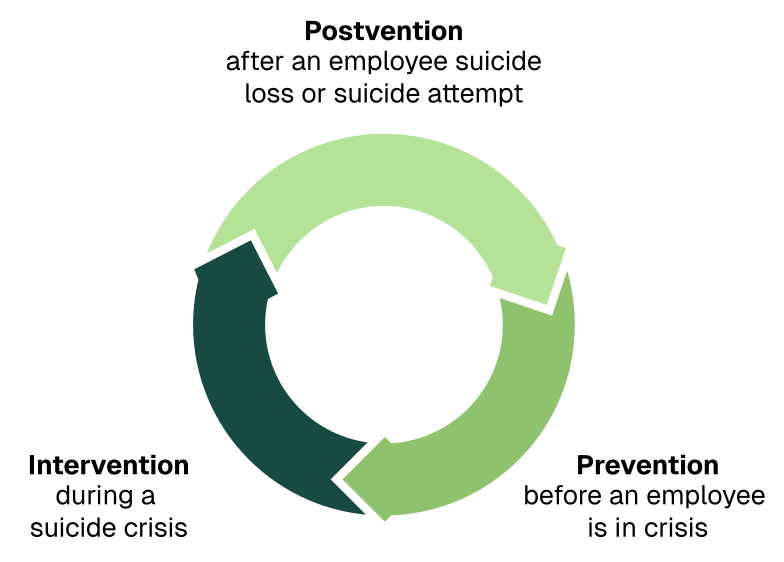
Are you concerned about someone in crisis or responding to a recent suicide attempt or loss?
If you are worried that someone may be at immediate risk of suicide, go directly to:
Guidance on recognizing warning signs, having a caring conversation, and connecting the person to urgent support.
If your workplace has experienced a recent suicide or suspected suicide, start with:
Leadership roles, step-by-step response phases, communication guidance, and support strategies for affected employees and teams.
Are you developing or strengthening your suicide prevention/postvention strategy?
To build basic knowledge about suicide as a workplace issue and grief and trauma responses related to a suicide loss, review:
If you are building or updating your overall suicide prevention and mental health strategy, focus on:
Leadership and culture actions, EAP and benefits promotion, and training and education ideas.
To embed suicide prevention and postvention into long-term workplace practices and policies, use:
Integrate lessons learned, align with legal and occupational health and safety expectations, and monitor progress over time.
Using definitions, tools, and resources
For quick orientation to key terms such as suicide postvention, suicide contagion, or critical incident response, see "Important Terms and Definitions" in the Introduction; you can dip into this section as needed rather than reading it all at once.
Throughout the toolkit, templates, and examples are provided to support real-time decision-making and communication; adapt these to fit your policies, collective agreements, culture, and the communities you serve, and seek clinical or legal consultation where appropriate.
Adapting the toolkit to your context
Use this toolkit alongside your existing health and safety, HR, and emergency response procedures, and align it with your broader psychological health and safety strategy.
Consider identifying internal leads (e.g., HR, health and safety, joint labour–management committees) who will champion the toolkit, keep it up to date, and ensure that key sections are known and easily accessible before a crisis occurs.